
Define critical load
Identify which pump, alarm, communication or control must continue.
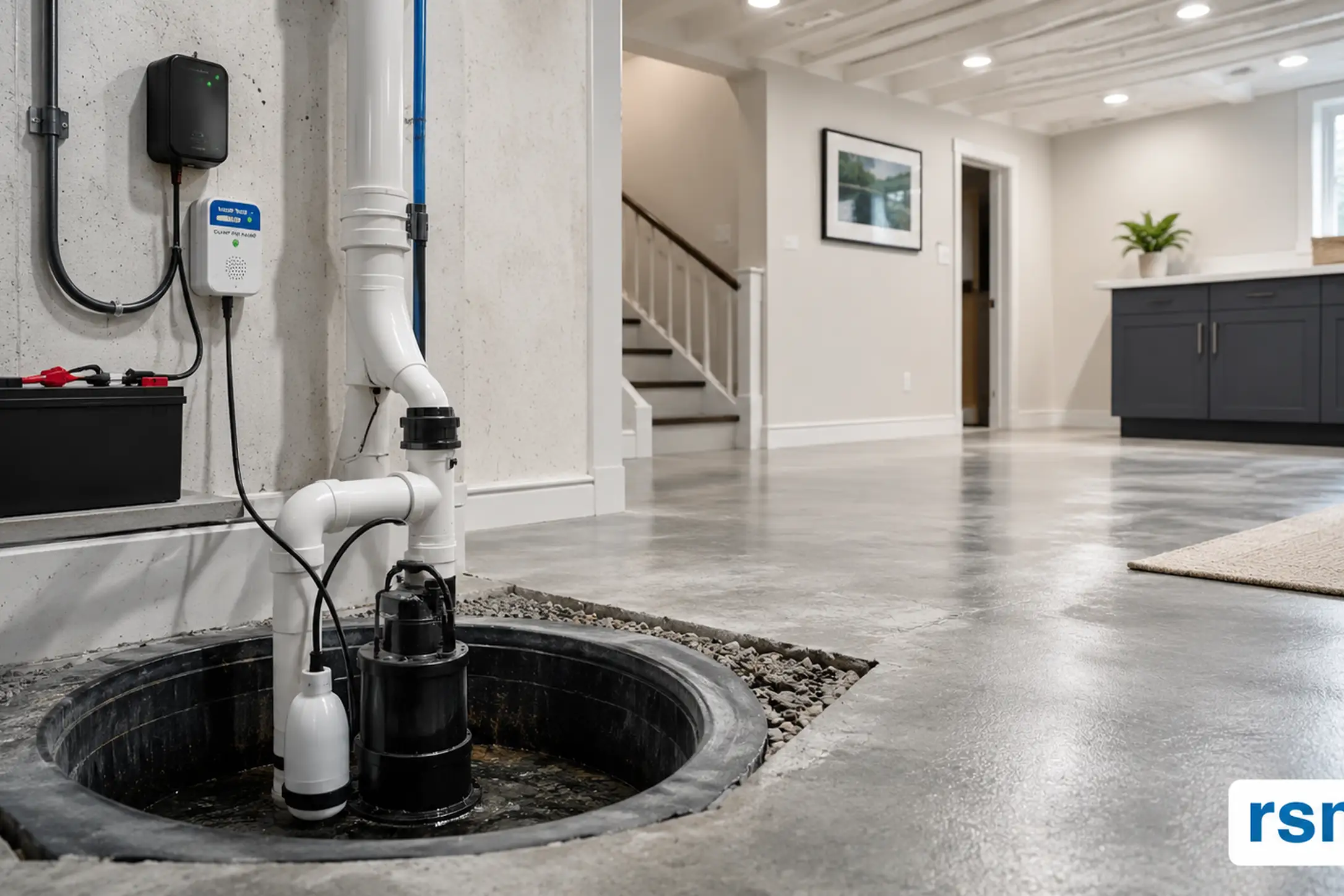
Power continuity
Backup power is reliable only when load, runtime, charging, environment, controls and maintenance work together.
Who this is for
Independent education and standards-informed practice guidance.
Law, code, municipal rules, permits, manufacturer instructions and qualified professional decisions remain controlling.
Owners, designers, contractors, inspectors and authorities retain assigned duties.
Core principles
Identify which pump, alarm, communication or control must continue.
Consider actual duty, head, cycling, condition and temperature.
Products and installations must meet applicable Ontario approval and safety requirements.
A battery can look normal while losing capacity.
Practice detail
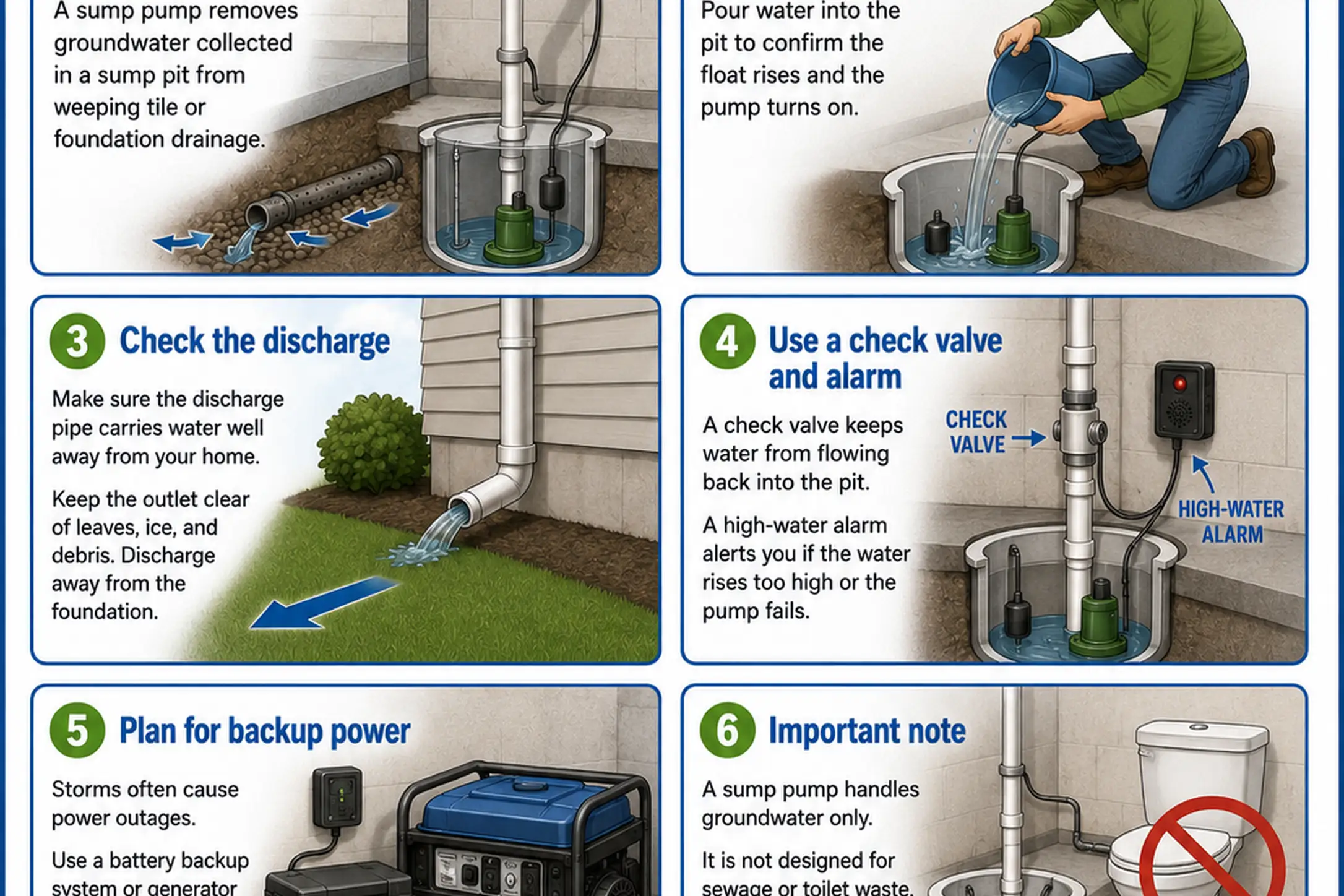
Backup may use a dedicated DC pump, inverter and battery, generator, larger energy-storage system or layered combination. Each has different failure modes. Do not assume labelled runtime will match actual pumping load.
Practice detail
Locate equipment where accessible and protected from water, impact and extreme temperature. Follow approved instructions and electrical requirements. Larger energy-storage systems can trigger location, capacity, separation and detection considerations.
Practice detail
Test transfer, pump, alarm, charger and restoration. Record chemistry, capacity, date, replacement recommendation and observed runtime. Investigate swelling, corrosion, heat, odour, damage or faults.
Working sequence
Define loads and consequence.
Select an approved architecture.
Plan location and charging.
Commission transfer and indicators.
Test, record and replace.
Avoidable failures
Related pathways
Official and institutional references
RSM summarizes concepts for education. Use current official documents, local authorities and qualified professionals for project decisions.
Frequently asked questions
No. Capacity, transfer, fuel, ventilation and maintenance differ.
Potentially, but compatibility, circuits, transfer, capacity and approval require assessment.
Follow instructions and condition testing, planning replacement before capacity becomes unreliable.
Where consequence justifies it, monitoring can identify silent loss of readiness.
Standards-informed practice
Connect knowledge with competent roles, approvals, records, inspection, maintenance and transparent communication.
Published: July 19, 2026 Last reviewed: July 19, 2026
RSM provides independent educational and standards-informed guidance. Confirm current legal, code, municipal, professional, product and project requirements with the appropriate authority and qualified people.
Next steps
Move from a single topic to the wider guidance, evidence and feedback process.